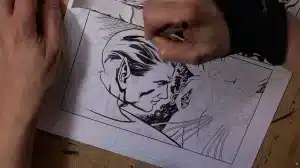


When it comes to creating comic book art, the size at which artists draw can vary widely and is an important aspect of the comic book production process. Whether you are a budding artist eager to dive into the world of comics or a seasoned fan curious about the behind-the-scenes of your favorite graphic novels, understanding the dimensions involved is key to appreciating the artistry and technicality behind each panel.

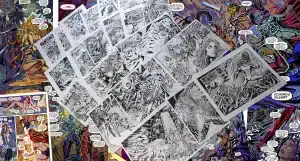
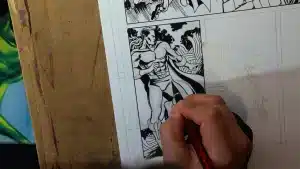
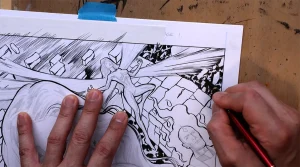
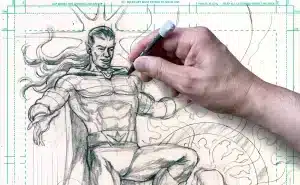
Traditionally, comic book artists have worked on 11″x 17″ blue line artboards. This size, also known as the “industry standard,” provides ample space for artists to include incredible details and maintain a clear distinction between panels. The “blue lines” printed on these boards are non-photo blue guides that help in structuring comic book pages, with borders for the live area, trim line, and bleed marks.


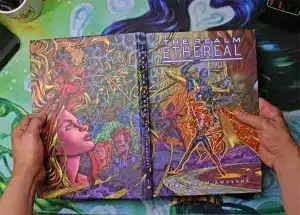
The larger workspace not only allows artists to insert minute details (such as when finishing the final comic book inking) that might be lost in a smaller scale but also serves a practical purpose in the printing process. The original artwork is often reduced in size when printed as a comic book or graphic novel, which means any imperfections or artifacts become less noticeable, ensuring a crisp and clear final product for readers to enjoy.

Moreover, working in this traditional format encourages consistency within the industry, facilitating smoother collaboration when multiple artists and inkers may work on the same project and standardizing the page layout for editors and printers.
While 11″x 17″ artboards are a staple in comic book art, the advent of digital art programs such as Procreate, Photoshop, and Clip Studio Paint, has added a layer of flexibility to the sizes at which artists can create. Digital platforms can imitate the traditional artboard layout with templates or can be entirely customized to suit the artist’s preferences.

One of the tremendous benefits of digital drawing is the scalability. Artwork drawn digitally can be easily resized to fit various formats, something that is not as easily achieved with physical drawings without a loss of quality. The ability to zoom in on a piece also allows artists to work on detailed sections without committing to a larger-sized paper unless desired.

In digital programs, artists are not constrained by physical space. The ‘canvas’ can be as large or as small as necessary, expanding virtually with the boundaries of the story that’s being told. Furthermore, tools within these programs can simulate virtually any medium like pencils, inks, or paints, without the need for physical supplies. This adaptability means that the artists’ approach can be more experimental and innovative, pushing the boundaries of traditional comic book styles.
The ability to work digitally also streamlines the workflow between the creative team. Artists can share their work instantaneously with writers, inkers, colorists, and editors, no matter where they are in the world. This swiftness and the ease of file sharing contribute to a more cohesive creative process and often faster production timelines.

Moreover, digital art has environmental benefits by reducing the need for paper and physical materials; it also minimizes storage space required for large artboards and contributes to a clutter-free workspace, which can be a significant advantage for artists working in smaller studios or from home.
When it comes to choosing what size to draw, there’s no one-size-fits-all answer for comic book artists. While the industry standard remains popular for its history and practicality, digital platforms have opened up a realm where artists can work in the size that best fits their vision and project needs.
The critical takeaway is for artists to understand the prerequisites of their chosen format—whether that’s the specifications required by a publishing house or the dimensions that lend themselves best to their style within a digital space. Artists must ensure that the chosen size enhances their ability to tell a story effectively and maintains the integrity and quality of their work throughout the production process.
In essence, whether one chooses to draw on traditional blue line artboards or harness the power of digital programs, the size in which comic book artists draw is an essential part of crafting visual narratives that engage and captivate audiences.